The First World War
Officers of The Royal Canadian Regiment
Brevet Major Josiah Sherlock Marrington Arthur Haigh Lyne-Evans
Soldiers of the First World War database entry - J.S.M.A.H. Lyne-Evans
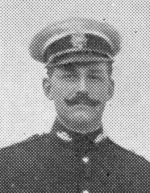
Capt. J.S.M.A.H. Lyne-Evans, Valcartier Camp, 1912
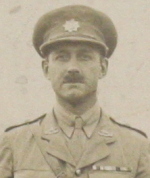
Capt. J.S.M.A.H. Lyne-Evans, Valcartier Camp, 1920
Service:
- R.M.C. Sandhurst 1901
- 2nd Lieut., XII Royal Lancers, 18 Jan 1902
- Lieut., R.O., 1905
- 2nd Lieut. (O.P.) 17th Lancers, 1906 for 18 months
- Certificates:
- Musketry, Hythe, 1902
- Equitation, Petawawa, 1912
- Regimental Service, The R.C.R.: 1912 - 1921
- Lieut. The R.C.R., 3 Feb 1912
- First World War - Wounded. 1914-15 Star, British War Medal, Victory Medal. Despatches. M.C.
- Seconded for R.C.R., 22 Sep 1914
- Adjutant, 3rd Provisional Battalion, Sep 1914
- Adjutant, 12th Battalion, Oct 1914
- Adjutant, 3rd Canadian Infantry Battalion, Nov 1914
- Landed in France, 6 Feb 1915
- Evacuated, shell shock, 5 May 1915
- Capt. The R.C.R., 6 Jun 1915
- Mentioned in Dispatches, June 1915
- SUPPLEMENT TO THE LONDON GAZETTE, 23 JUNE, 1915.; Captain J. H. Lyne Evans, 3rd Canadian Battalion - Awarded the Military Cross.
- G.S.O. 3, Shorncliffe, Nov 1915
- Staff Captains - Lieutenant (temporary Captain) Josiah S. M. A. H. Lyne-Evans, The Royal Canadian Regiment. Dated 20th August, 1915.
- General Staff - General Staff Officers; 3rd Grade - Captain Josiah S. M. A. H. Lyne-Evans, Canadian Local Forces, from a Staff Captain. Dated 2nd November, 1915.
- Cdn. Corps as learner, 11 Mar 1916
- Temp. Maj. C.E.F., 1 Jul 1916
- 7 Cdn. Inf. Bde. as learner Mar 1917
- SUPPLEMENT TO THE LONDON GAZETTE, 30 AUGUST, 1917; G.S.O., 3rd Grade.-Temp. Maj. J. S. M. A. H. Lyne-Evans, Gen. List, relinquishes his appt. 3rd Mar. 1917.
- The R.C.R. (supernumary to establishment), 26 Apr 1917, and to be Temp. Maj.
- SUPPLEMENT TO THE LONDON GAZETTE, 29 SEPTEMBER, 1917; R. Can. Regt. - Temp. Maj. J. S. M. A. H. Lyne-Evans, from a Can. Inf. Bn., to be temp. Maj., supern. to estabt. 3 June 1917.
- 14 days leave to U.K., 27 Dec 1917
- SUPPLEMENT TO THE LONDON GAZETTE, 5 MARCH, 1919; Nova Scotia Regt. - Temp. Maj. J.H. Lyne-Evans, M.C., to comd. a Divnl. Wing and to remain seconded 21 Nov. 1918, to 7 Jan. 1919.
- SUPPLEMENT TO THE LONDON GAZETTE, 9 MAY, 1919; Nova Scotia Regt. - Temp. Maj. J. H. Lyne-Evans, M.C., to be actg Lt.-Col. while comdg a Wing, C.C.R.C. 21 Nov. 1918.
- SUPPLEMENT TO THE LONDON GAZETTE, 2 SEPTEMBER, 1919; Nova Scotia Regt. - Temp. Maj. (actg. Lt.-Col.) J. H. Lyne-Evans, M.C., to be temp. Lt.-Col. 21 May 1919.
First World War Mentions in Despatches:
- Capt, 3rd Bn., L.G. 29200; 22 Jun 1915
Canada's Historic Places - Carwarden
In 1910, Josiah Sherlocke Warrington (sic) Arthur Haigh Lyne-Evans engaged Leslie Fairn, then a local architect in Kings County, to design Carwarden. . . . Lyne-Evans was born in Haycock Parish, Lancashire, England and came to Nova Scotia around 1906, after leaving the army. He was a Second Lieutenant with the 17th Lancers. Around the time he came to Nova Scotia he married Florence Caroline. It is not sure whether they married in Britain or Canada, as there is no record of their marriage here. It is, however, almost certain that either Lyne-Evans or his wife came into money that paid for Carwarden, for it proved to be an expensive undertaking. Lyne-Evans paid $10,000 for 100 acres of farmland and another fourteen acres of dykeland.
Lyne-Evans decided to become a gentleman farmer in Kings County. Apparently though his money proved insufficient for this choice of lifestyle because in 1912, Lyne-Evans sold a half interest in the property for $1.00 to Stephen Henry Morris of HMCS Niobe, stationed in Halifax. In the arrangement, the Lyne-Evanses kept Carwarden.
In 1912, Lyne-Evans was also commissioned as an officer in the Royal Canadian Regiment, then stationed at the Halifax Citadel. He boarded at the Citadel's barracks until the outbreak of the First World War, when he was sent to France. By 1915 he commanded the 23rd Infantry Battalion and was wounded at the Second Battle of Ypres. He later suffered from shell shock and in 1917 he had to take sick leave because of a recurrence of trench fever. In 1919 he returned to Nova Scotia and two years later transferred to the reserves.
Major Lyne-Evans's Medal Group
In 2013, Major Lyne-Evans's medals were listed for sale on ebay. Excerpted text from the seller's item description and photos follow:
A nice Military Cross and Mentioned-in-Despatches group of four to Capt/Lt Col J.S.M.A.H. Lyne-Evans of The Royal Canadian Regiment. The Military Cross (M.C.) and British War Medal have frayed ribbons and the group is mounted as worn. The M.C. (identified in London Gazette (L.G.) Issue 23/6/15 is not named) and is one of the first of this decoration awarded and the first to The RCR. The 1914/15 star is named Capt. J.H. Lyne-Evans, 3/Can Inf: and the War & Victory (MID L.G. 22/6/15) medals are named Lt. Col. J.H. Lyne-Evans. Lt Col Lyne-Evans had previous service with the 17th Lancers (no medals) and joined The RCR 2/2/1912. While the The RCR did garrison duty in Bermuda the 1st Contingent, CEF, was preparing to head overseas and Lyne-Evans was seconded to the 12th Canadian Infantry as Captain and Adjutant in 1914. His MC and MID were awarded while he was with the 3rd Can Inf and he was wounded in the Second Battle of Ypres as mentioned on page199 and 208 of the Regiment's history, The Royal Canadian Regiment 1883-1933 by R.C. Fetherstonhaugh. He is also mentioned in the book, The Official Story of The Canadian Expeditionary Force Vol 1. on page 99 as having gone out into no man's land with a volunteer to rescue Captain Muntz. If I read this correctly, this rescue was during the battle of Festubert. Although Lyne-Evans was awarded his MC on the occasion of His Majesty's Birthday (no citation) it is likely that his actions in battle warranted some notice.
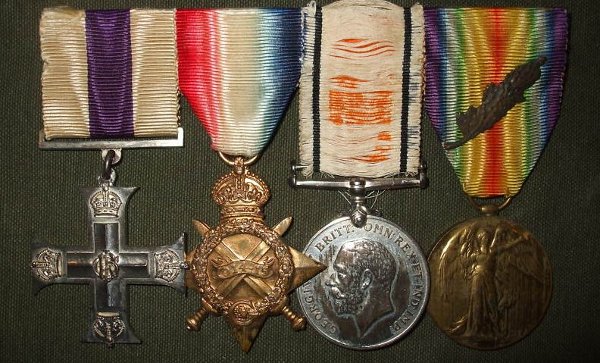
Medals awarded to Lieut / Lt Col Lyne-Evans, M.C., as presented for sale on ebay (2013).
Photo by ebay seller.
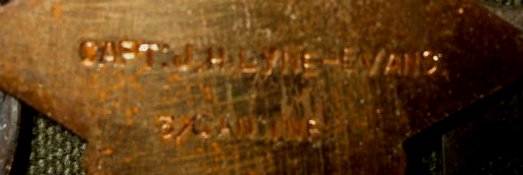
Naming on the 1914-15 Star awarded to Lieut Lyne-Evans.
- The O'Leary Collection; Medals of The Royal Canadian Regiment.
- Researching Canadian Soldiers of the First World War
- Researching The Royal Canadian Regiment
- The RCR in the First World War
- Badges of The RCR
- The Senior Subaltern
- The Minute Book (blog)
- Rogue Papers
- Tactical Primers
- The Regimental Library
- Battle Honours
- Perpetuation of the CEF
- A Miscellany
- Quotes
- The Frontenac Times
- Site Map
 The RCR in the Great War
War Diary
Battle Honours
Battle Bars and The RCR
The RCR Battle Bar Ledger (pdf)
Honours and Awards
Roll of Honour
Prisoners of War
Cemetery List
Cemetery Map
Courts Martial
Officers
RSMs of The RCR (1914-1919)
NCOs and Soldiers
An Officer's Diary (1914-1918)
Recollections of a Nonagenerian (R. England) (1916-1919)
On to Bermuda (1914-15)
England and France 1915-1916 (Hayes; 1931)
Overseas with The Royals (1915)
Regimental History Pamphlet (1917)
Amiens (1918)
Cambrai (1918)
Monchy-le-Preux (1918)
Under-aged Soldiers in The RCR
Not All Were Volunteers; The RCR and the Military Service Act
Sentenced to Death by Court Martial
The 7th Trench Mortar Battery
A Regimental Goat
Regiment and Family, Bermuda 1914-15
"March the Guilty Bastard In"
Surrendered as Stowaway
Re-Visiting the Great War Roll of Honour for The RCR
Canadian Corps Trench Standing Orders (1916)